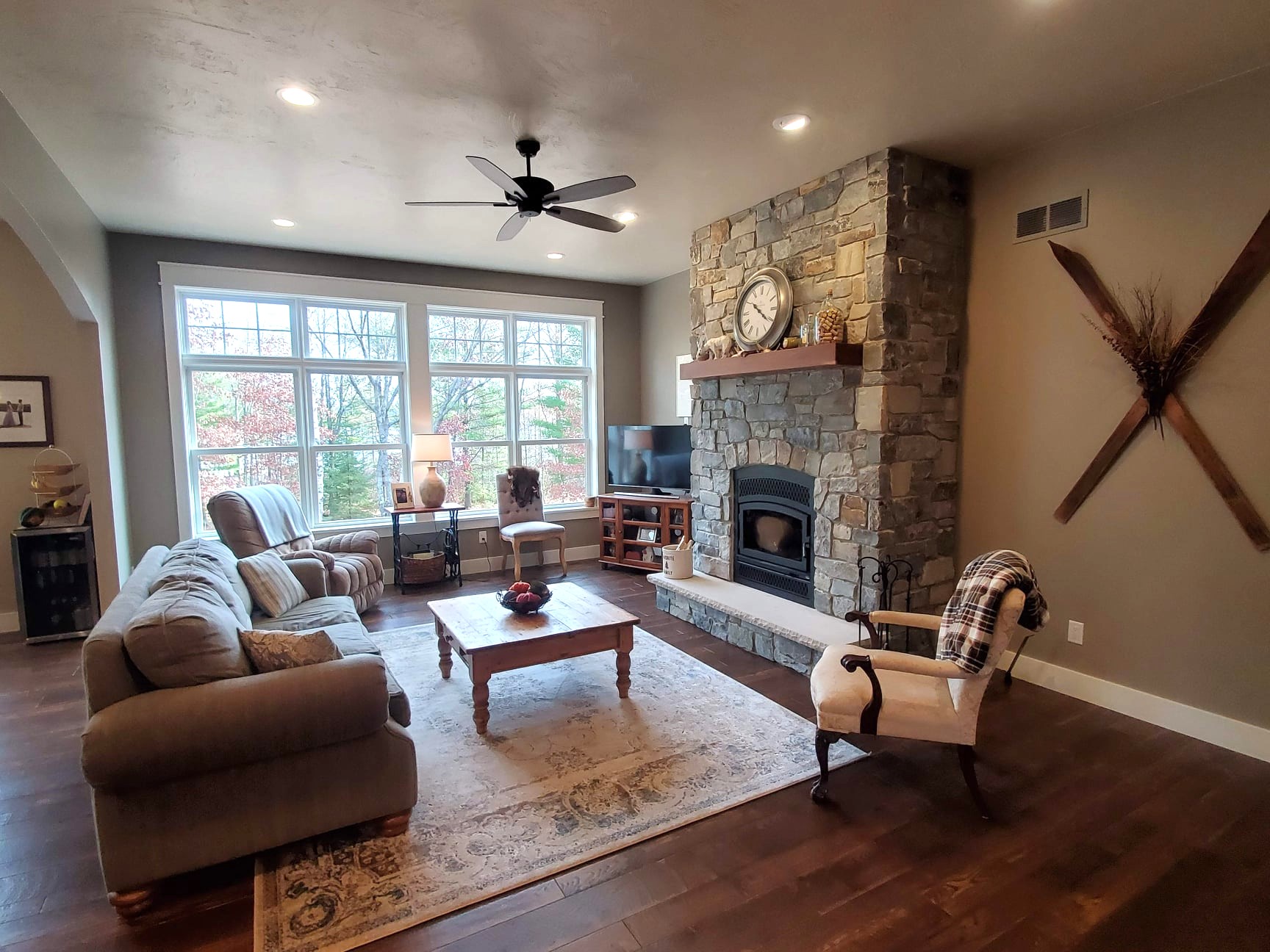
Trim is more than just decorative—it brings character and creates clean, intentional transitions between surfaces. This is where craftsmanship truly shines. At Lakefront Building & Design, we guide our clients through every detail of their custom home, including the fine points of trim work. Understanding the terminology empowers you to make confident, informed decisions as we help you choose the perfect trim style for your space.
Here’s a breakdown of the key components of window and door casings and base trim, along with style variations and how they work together to define a room’s aesthetic.
Window & Door Casings: Key Components & Styles
Casings surround the perimeter of a window or door to conceal gaps between the frame and wall while creating a finished architectural look. They typically include:
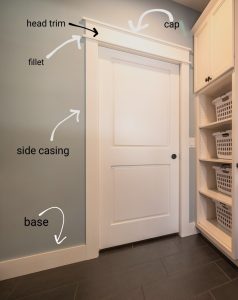
- Head Casing (or Head Trim): The horizontal trim piece installed at the top of a window or door opening. It forms the upper frame and is often
- wider or more detailed than the side casings.
- Cap Molding: An optional, additional trim piece installed above the head casing. It projects slightly to create visual weight and can include profiles like square stock, crown, or stacked molding elements—commonly used in Craftsman and traditional trim assemblies.
- Side Casings (Legs): The vertical trim pieces installed on each side of a window or door opening—extending from the sill to the head casing for windows, and from the floor to the head casing for doors. These can be simple flat stock or have detailed profiles, and are sometimes paired with a back band for added depth.
- Back Band: A thin molding applied around the outside edge of flat casing to increase its visual thickness and detail. Common in Colonial, Victorian, and traditional styles.
- Sill or Stool (Window Only): The horizontal bottom ledge of a window casing that projects slightly beyond the wall. It provides a shelf-like finish and acts as the base of the window trim assembly.
- Apron (Window Only): The trim piece installed directly below the sill. It visually supports the sill and completes the lower portion of the window trim.
Base Trim: Components & Profiles
Baseboards are installed at the base of interior walls to cover the joint between wall and flooring, protect from damage, and provide a clean transition.
Base Trim Components
- Baseboard: The main horizontal trim piece installed at the bottom of interior walls. It covers the joint between the wall and the floor and protects drywall from scuffs. Baseboards typically range from 3″ to 7″+ in height and are available in flat or profiled styles.
- Base Cap: A small molding applied to the top edge of a flat baseboard to add a layer of profile or contour. Used to build up more detailed, traditional-style base trim assemblies.
- Shoe Molding (or Base Shoe): A slender, rounded trim installed at the base of the baseboard where it meets the flooring. It hides gaps caused by uneven floors and is often used in remodels or older homes. Skipped in many modern designs for a cleaner look.
Finish Options & Materials
At Lakefront Building & Design, we exclusively install solid wood trim to ensure the highest quality finish and lasting craftsmanship in every home we build. Unlike synthetic or composite options, solid wood offers a richness and authenticity that aligns with our custom home standards.
Because each home is unique, clients have the flexibility to choose from a variety of wood species, each offering distinct color, grain, and character. Here are a few common examples, but remember this list is not all inclusive!
- Pine: A popular, budget-friendly option that’s easy to paint or stain. It has a smooth grain but may feature occasional knots, adding subtle character.
- Poplar: Ideal for paint-grade trim. It’s stable, smooth, and free of heavy grain, making it a favorite for a clean, consistent finish.
- Oak: Known for its prominent grain and durability. Often selected for stain-grade applications where texture and richness are desired.
- Maple: Smooth and dense, great for a refined stained look. It resists dents and wears well over time.
- Alder: Offers a warm, rustic appearance with subtle knots and natural variation—perfect for lake homes or craftsman-style interiors.
Paint-Grade vs. Stain-Grade Trim
- Paint-Grade Trim: Typically crafted from poplar or clear pine, this type of trim is selected for a sleek, modern look. It can be finished in any color to coordinate with wall tones, cabinetry, or architectural accents. It’s also a great choice when you want the shape and profile of the trim to be the standout feature, rather than the wood itself.
- Stain-Grade Trim: Made from hardwoods or richly grained softwoods like oak, alder, or maple, stain-grade trim highlights the natural beauty and character of the wood. This is especially fitting in rustic, lake house, or Craftsman-inspired homes, where warmth and texture are part of the design story. Clear finishes, light stains, or deep tones can all be used to enhance the grain and complement other wood elements in the home.
Choosing the right wood species and finish helps define the overall tone of your home—from clean-lined and contemporary to warm and timeless. Our team is here to help you navigate these decisions, ensuring the trim package not only fits your home’s style but elevates it.
Conclusion
Trim may seem like a small detail, but it plays a major role in defining the style, quality, and character of a custom home. From the profile of a baseboard to the wood species selected for window casings, each choice contributes to the overall design. At Lakefront Building & Design, we walk clients through these details with care—because we know that exceptional trim finish work is where our craftsmanship sets us apart as a premier Northwoods builder. Whether you’re drawn to clean-lined modern profiles or rich, character-filled woodwork, our team helps you create a look that’s both timeless and uniquely yours.