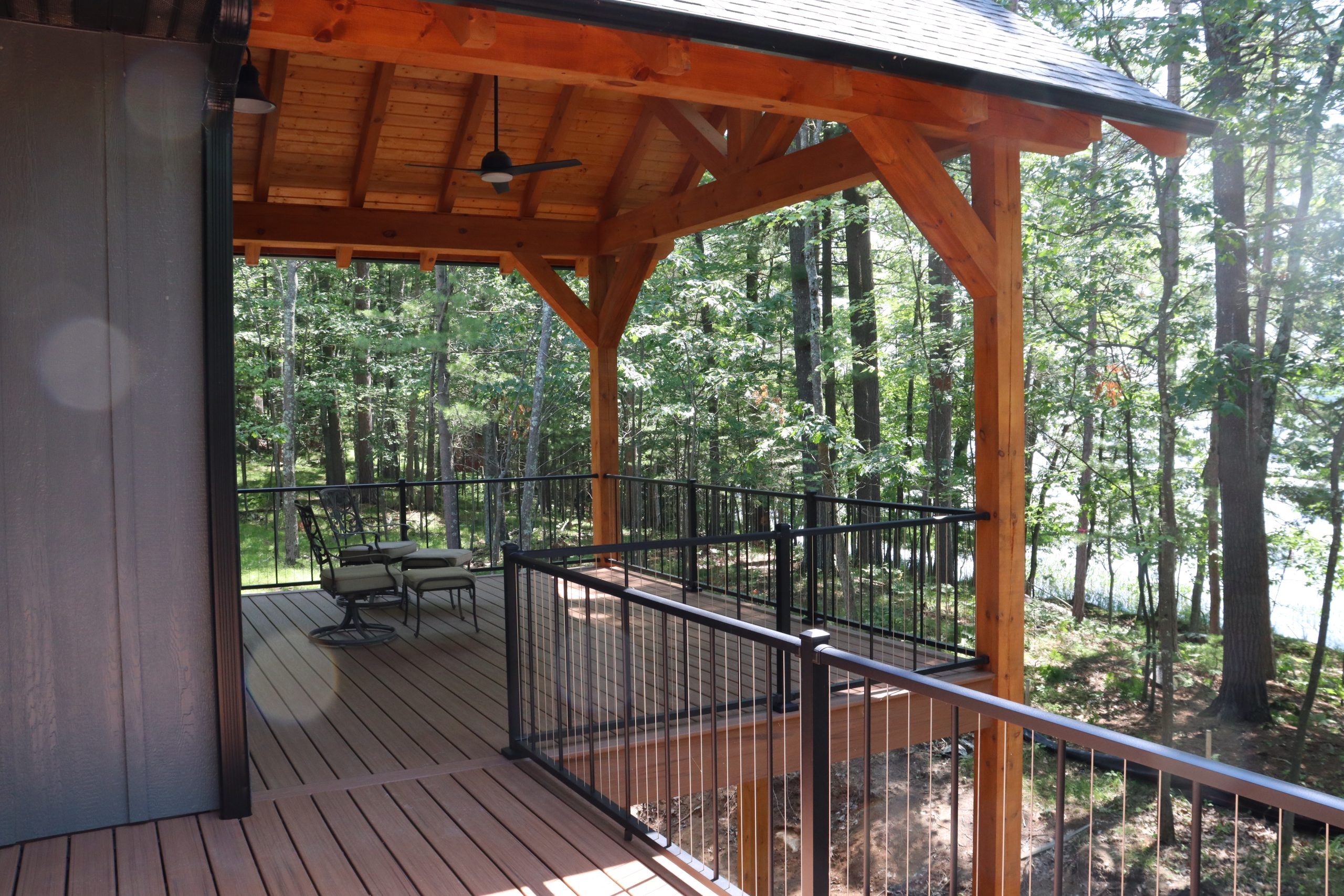
Outdoor living is a big part of life in Northern Wisconsin. Whether it’s enjoying morning coffee by the lake, grilling with friends in the summer, or watching the sunset after a day on the water, a well-designed deck becomes one of the most enjoyed spaces of a lake home.
But designing a deck involves more decisions than many homeowners initially expect. Decking materials, railing systems, porch flooring options, and even drainage systems can all affect how the space looks, performs, and holds up over time in the Northwoods climate.
At Lakefront Building & Design, we help homeowners understand these options so they can choose materials that balance durability, maintenance, aesthetics, and long-term value.
Composite Decking vs. Wood Decking
Years ago, most decks in Northern Wisconsin were built with pressure-treated wood. While wood decking can still be a good option in some situations, many homeowners today choose composite decking for its durability and lower maintenance requirements.
Composite decking is designed to resist rot, splintering, and fading—important benefits in a climate that sees heavy snow, moisture, and strong sun exposure throughout the summer.
Some of the composite products we frequently install include Trex® and TimberTech® composite decking. Both offer a wide range of colors and textures designed to mimic the look of real wood while requiring significantly less upkeep over time.
Compared to traditional wood decking, composite materials typically:
- Require less staining or sealing
- Resist moisture and insects
- Maintain a more consistent appearance over time
Composite decking does have a higher upfront cost, but many homeowners appreciate the long-term maintenance savings and durability.
That said, every project is different. Some homeowners still prefer the look and feel of real wood, while others prioritize longevity and ease of care.
Traditional Deck Boards vs. Tongue-and-Groove Porch Decking
Most decks are built using traditional deck boards with small gaps between each board. These gaps allow rain and snow to drain through the deck surface.
However, another option sometimes used in lake homes is tongue-and-groove decking.
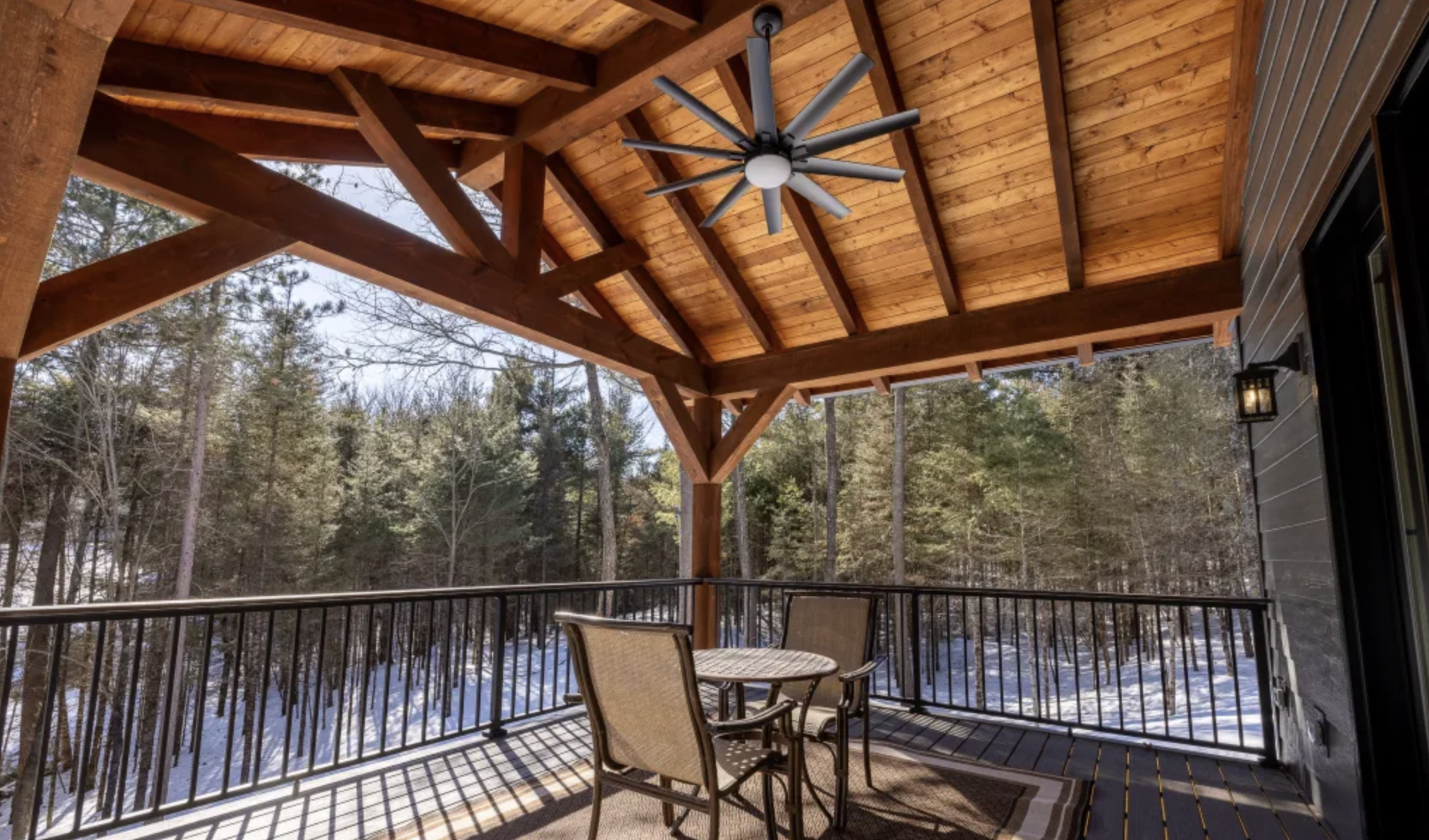
Tongue-and-groove boards lock together tightly, creating a smooth, finished floor surface more similar to a porch than a typical deck. These systems are often used in:
- Covered decks
- Screen porches
- Outdoor living areas protected by a roof
Because water cannot drain through tongue-and-groove decking the same way it does with traditional deck boards, it is typically installed in areas that are protected from direct rain and snow.
This option can create a more finished, indoor-outdoor feel for covered gathering spaces.
Railing Options for Northwoods Decks
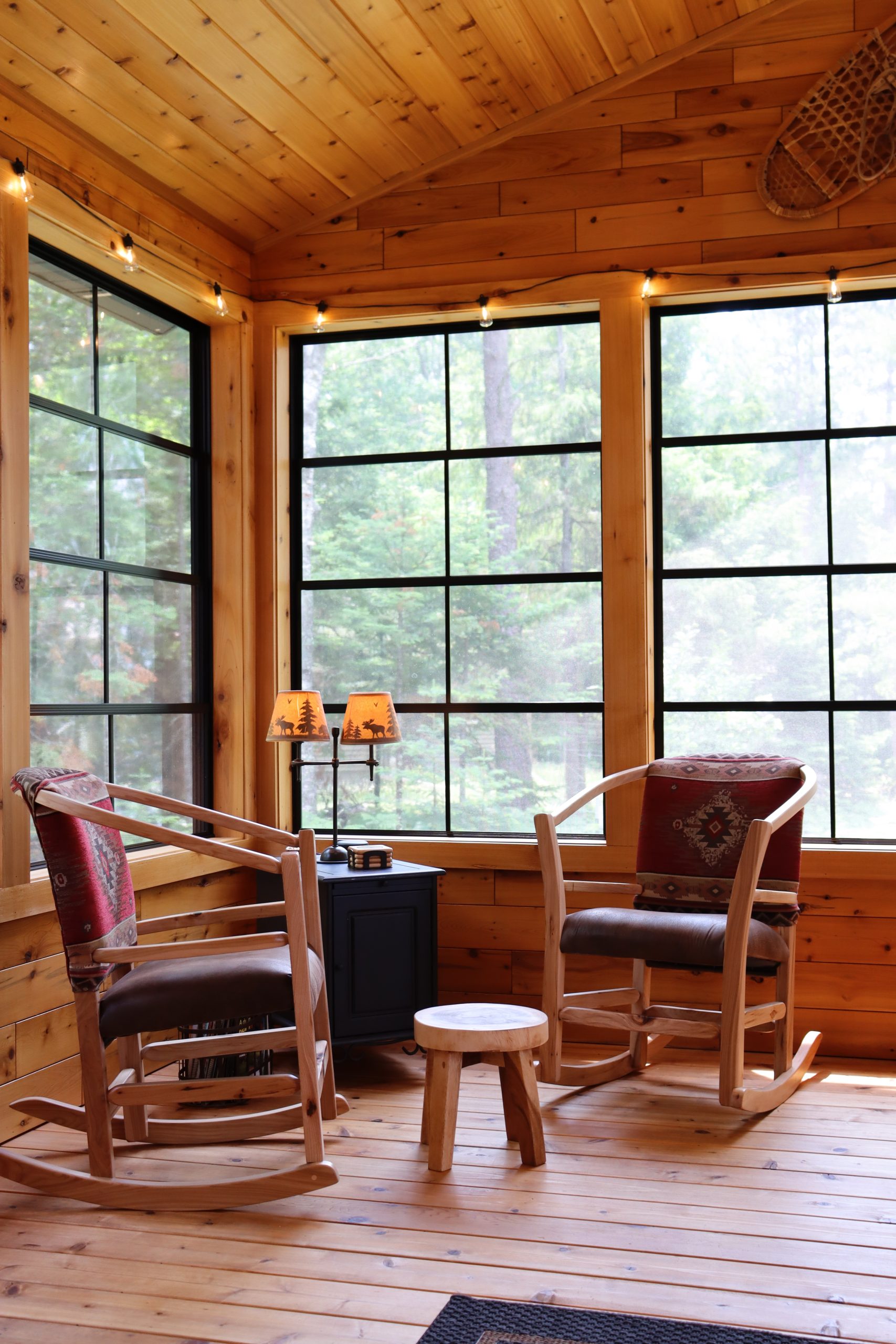
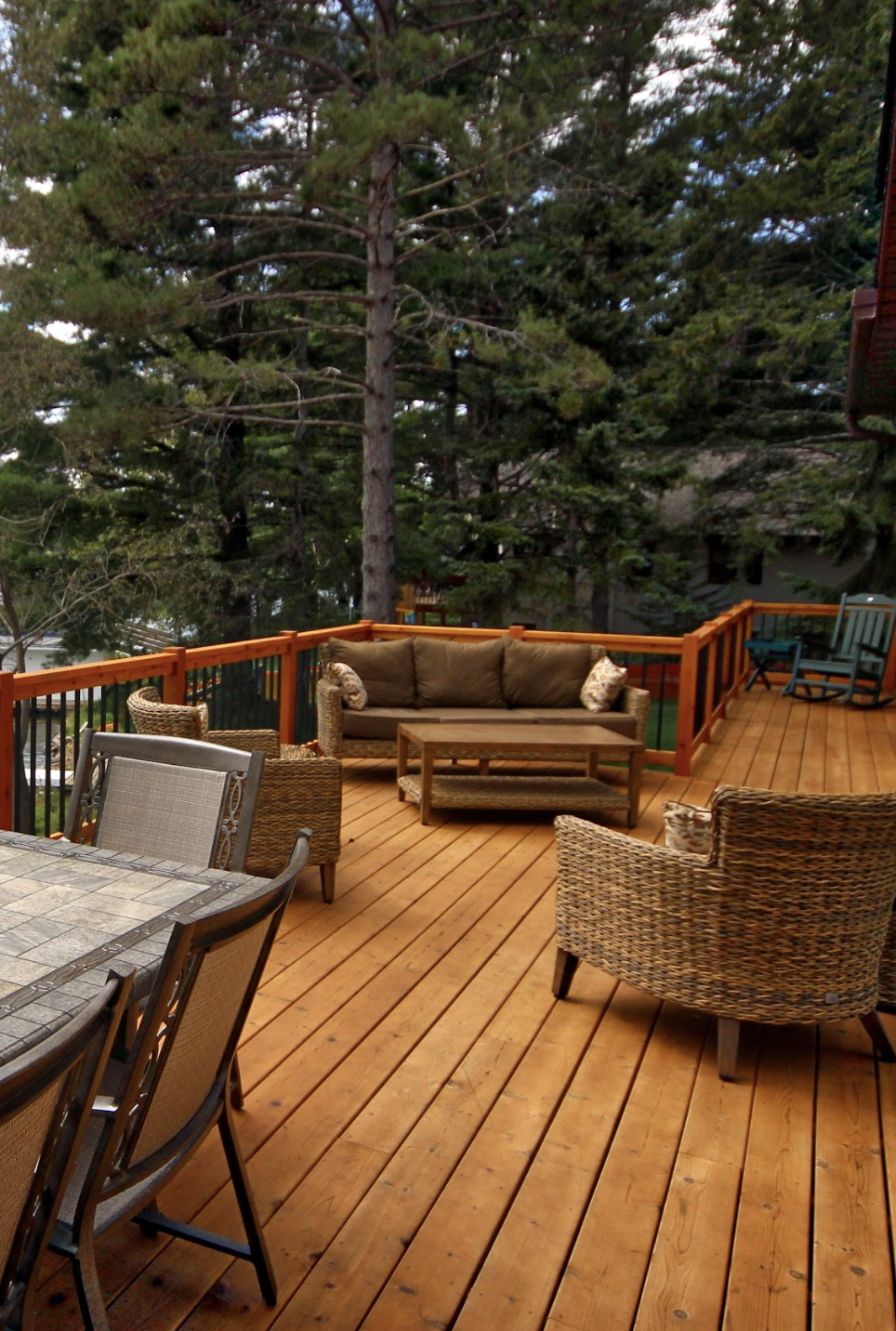
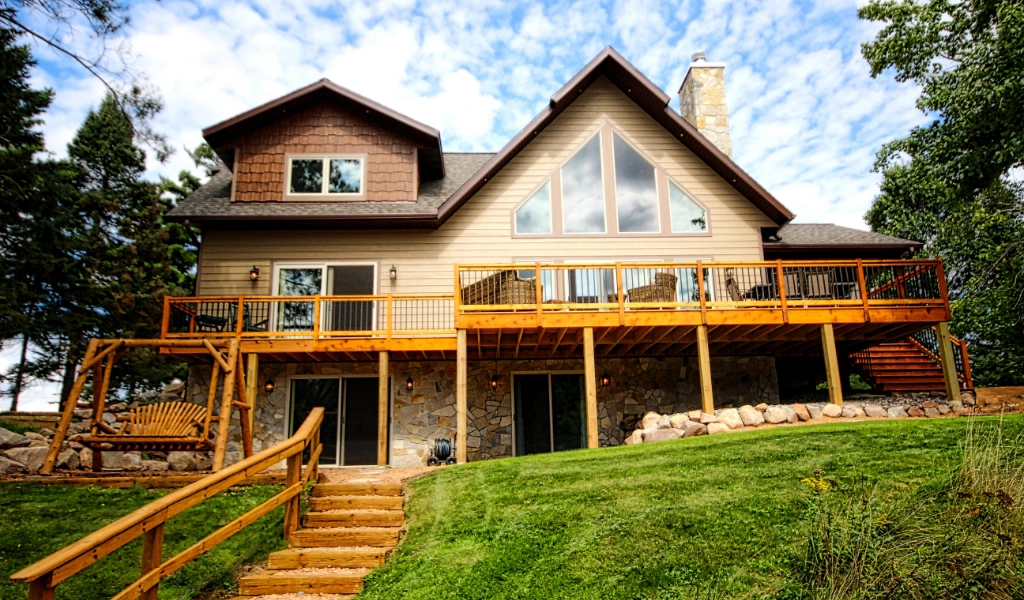
Railing systems affect both safety and how open the deck feels—especially important for lake homes where preserving the view is a priority. We often install systems like Westbury by DCI because they offer a variety of railing styles, but there are several different approaches homeowners can consider depending on their priorities for view, maintenance, and cost.
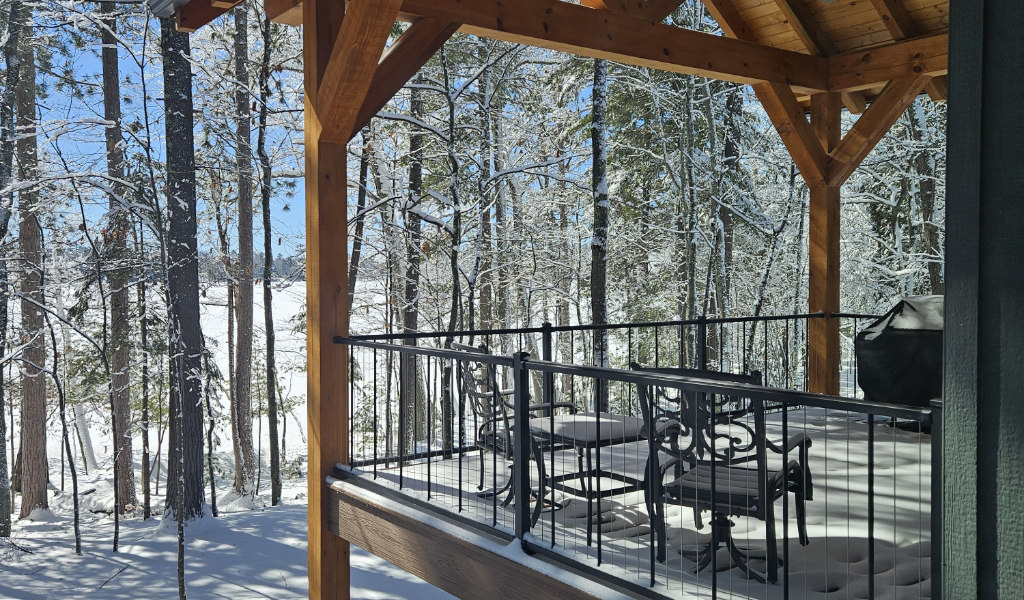
- Aluminum Baluster Railing
A very popular, low-maintenance option that offers clean lines and holds up well in Northern Wisconsin’s climate.
Pros: durable, low maintenance, mid-range cost
Cons: vertical balusters slightly interrupt the view - Cable Railing (Horizontal or Vertical)
Uses stainless steel cables instead of traditional balusters to create a more open, modern look.
Pros: minimal view obstruction, modern appearance
Cons: higher cost, occasional cable tension adjustments - Glass Panel Railing
Glass panels provide the most unobstructed view of the lake.
Pros: clear views, high-end appearance
Cons: premium cost, occasional cleaning needed - Traditional Wood Railing
A classic option that fits rustic or traditional lake homes.
Pros: natural look, lower upfront cost
Cons: requires regular staining or painting
Under-Deck Drainage Systems
Another feature homeowners sometimes explore is an under-deck drainage system.
These systems are installed beneath the deck boards and capture water that drains through the decking surface. The water is then directed away from the space below.
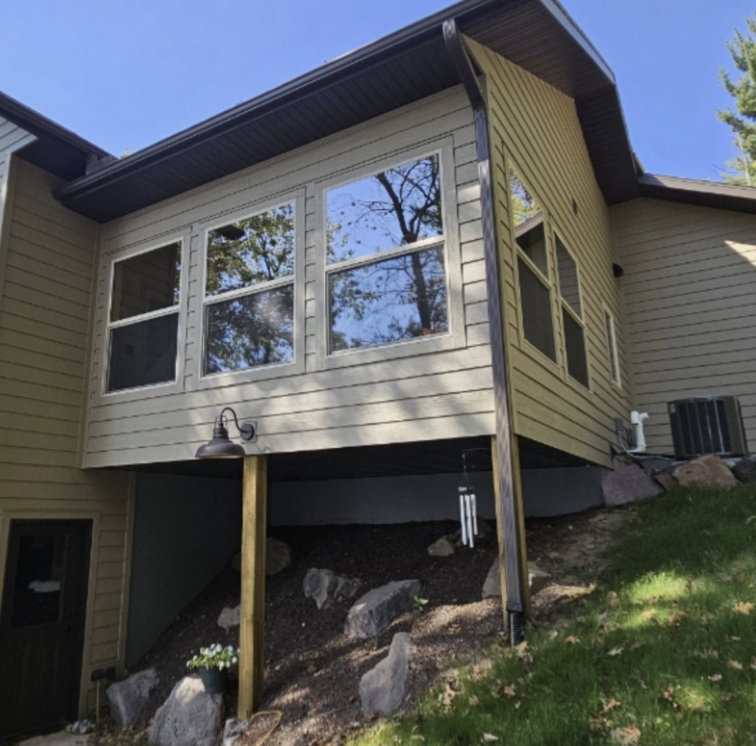
This can create a dry area underneath the deck, which can be useful for:
- Patio seating areas
- Walk-out basement entrances
- Outdoor storage
- Covered gathering spaces
While these systems add cost, they can significantly increase how much usable outdoor space a home has.
Designing an Outdoor Space That Works for Your Home
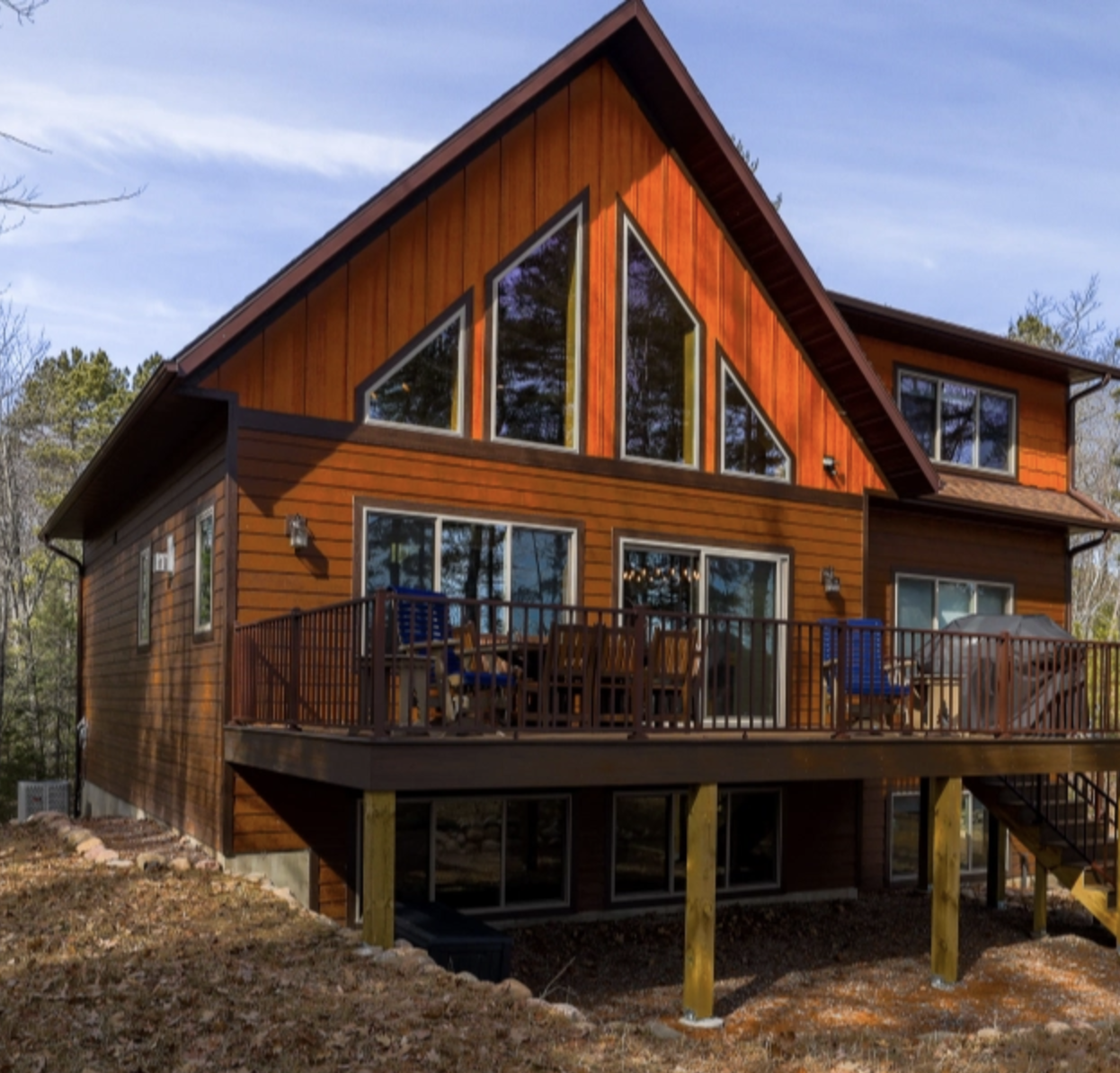
When designing a deck for a Northwoods lake home, the goal isn’t just choosing materials—it’s creating a space that fits how the home will actually be used.
Some of the things we help homeowners think through include:
- Deck size and layout
- Stair placement and yard access
- Sun exposure and shade
- Connections to patios or lower-level outdoor spaces
- Durability in Northern Wisconsin’s climate
When these decisions are made thoughtfully, the deck becomes more than just an outdoor platform—it becomes a natural extension of the home.
Planning Your Decking and Railing Options
Every home, property, and lakefront setting is different, which means there’s rarely a one-size-fits-all solution when it comes to decking and railing.
Our goal is to help homeowners understand the available options so they can make confident decisions about the materials and design that will work best for their home and lifestyle.
With the right materials and thoughtful planning, a deck can become one of the most enjoyable and functional spaces in a Northwoods lake home.