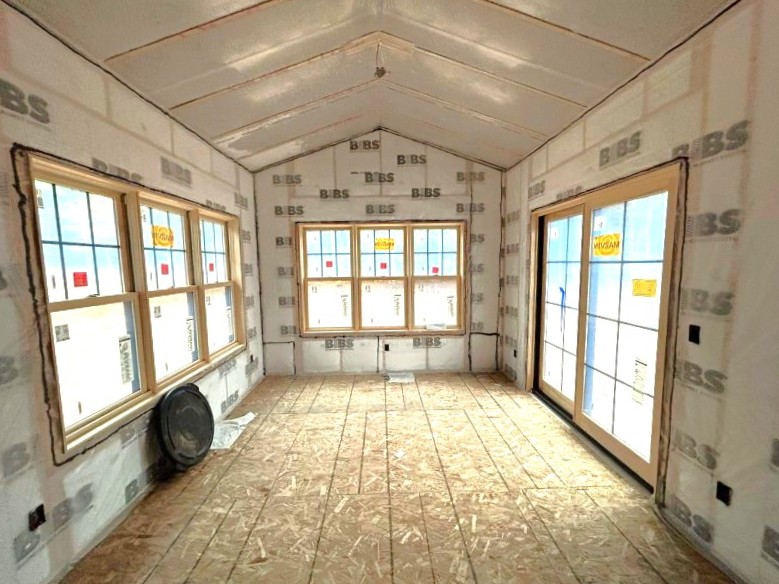
When building a home in Northern Wisconsin, insulation becomes one of the most important decisions affecting comfort, energy efficiency, and long-term durability.
But many homeowners quickly discover that there isn’t just one option. Builders may recommend fiberglass batts, spray foam, blown-in fiberglass systems like BIBS®, or cellulose insulation — and each comes with different benefits, tradeoffs, and health considerations.
So what’s actually the best insulation for a cold-climate home?
The honest answer is: it depends on your goals, budget, and how the home is designed.
Below is a breakdown of the most common insulation systems used in Northern Wisconsin homes, including where each performs well and what homeowners should know about installation and indoor air quality.
What Actually Matters Most in Cold-Climate Insulation
Before comparing products, it’s important to understand what truly impacts insulation performance in a Northern Wisconsin home.
Homeowners often focus only on R-value, but several other factors play a major role:
- Air sealing and draft control
- Proper installation around wiring and plumbing
- Moisture management inside the wall system
- Consistent coverage without gaps or compression
- Indoor air quality and material safety
- Long-term durability
In cold climates, air leakage often causes more energy loss than insulation thickness alone, which is why builders consider the entire wall system when choosing insulation.
Fiberglass Batt Insulation
Fiberglass batts are one of the most common insulation systems used in residential construction.
Pros
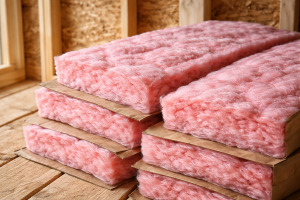
- Lower upfront cost
- Widely available and familiar to installers
- Non-combustible material
- Stable and long-lasting when properly installed
Cons
- Performance depends heavily on installation quality
- Gaps around wiring and plumbing can reduce effectiveness
- Compression during installation lowers R-value
Health considerations
Fiberglass insulation is generally considered safe once installed behind drywall. During installation, however, fiberglass fibers can irritate the skin, eyes, and respiratory system, which is why installers typically wear protective equipment.
Once enclosed within the wall system, fiberglass does not typically present ongoing indoor air quality concerns.
When builders use it
Batt insulation works well in straightforward wall systems where framing is consistent and installation can be carefully controlled.
Wet-Sprayed Cellulose Insulation
Cellulose insulation is made primarily from recycled paper products and is installed by spraying the material into wall cavities with water and adhesive.
Pros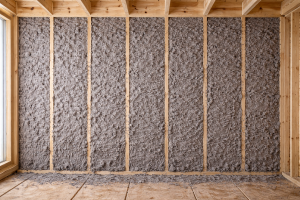
- Made largely from recycled materials
- Can fill cavities more completely than batts
- Good sound control
Cons
- Requires drying time before drywall installation
- Installation conditions must be carefully managed
- Moderate R-value compared with some alternatives
Health considerations
Cellulose insulation is treated with borates to improve fire resistance and discourage pests and mold. These additives are generally considered low-toxicity when installed properly within wall assemblies.
Because cellulose is installed wet, it’s important that the material fully dries before drywall installation to avoid moisture-related issues inside the wall system.
When builders use it
Cellulose is often selected when installers want more complete cavity coverage than batts provide.
Spray Foam Insulation
Spray foam insulation has become popular for its air-sealing capabilities. It is available in both open-cell and closed-cell formulations.
Pros
- Excellent air sealing when properly installed
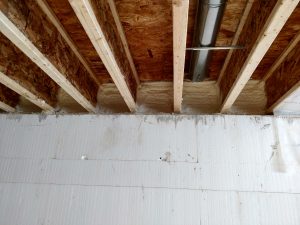
- Closed-cell foam provides high R-value per inch
- Useful in difficult-to-insulate areas such as rim joists or rooflines
Cons
- Higher upfront cost
- Requires specialized installation equipment
- Often used in combination with other insulation systems
Health considerations
During installation, spray foam insulation releases chemical vapors that require protective equipment and ventilation. Improper installation can lead to lingering odors or off-gassing if the foam does not cure correctly.
For this reason, professional installation and proper curing conditions are especially important with spray foam systems.
When builders use it
Spray foam is often used in targeted areas where strong air sealing is needed, such as rim joists or complex roof assemblies.
Blown-In Fiberglass Systems (BIBS®)
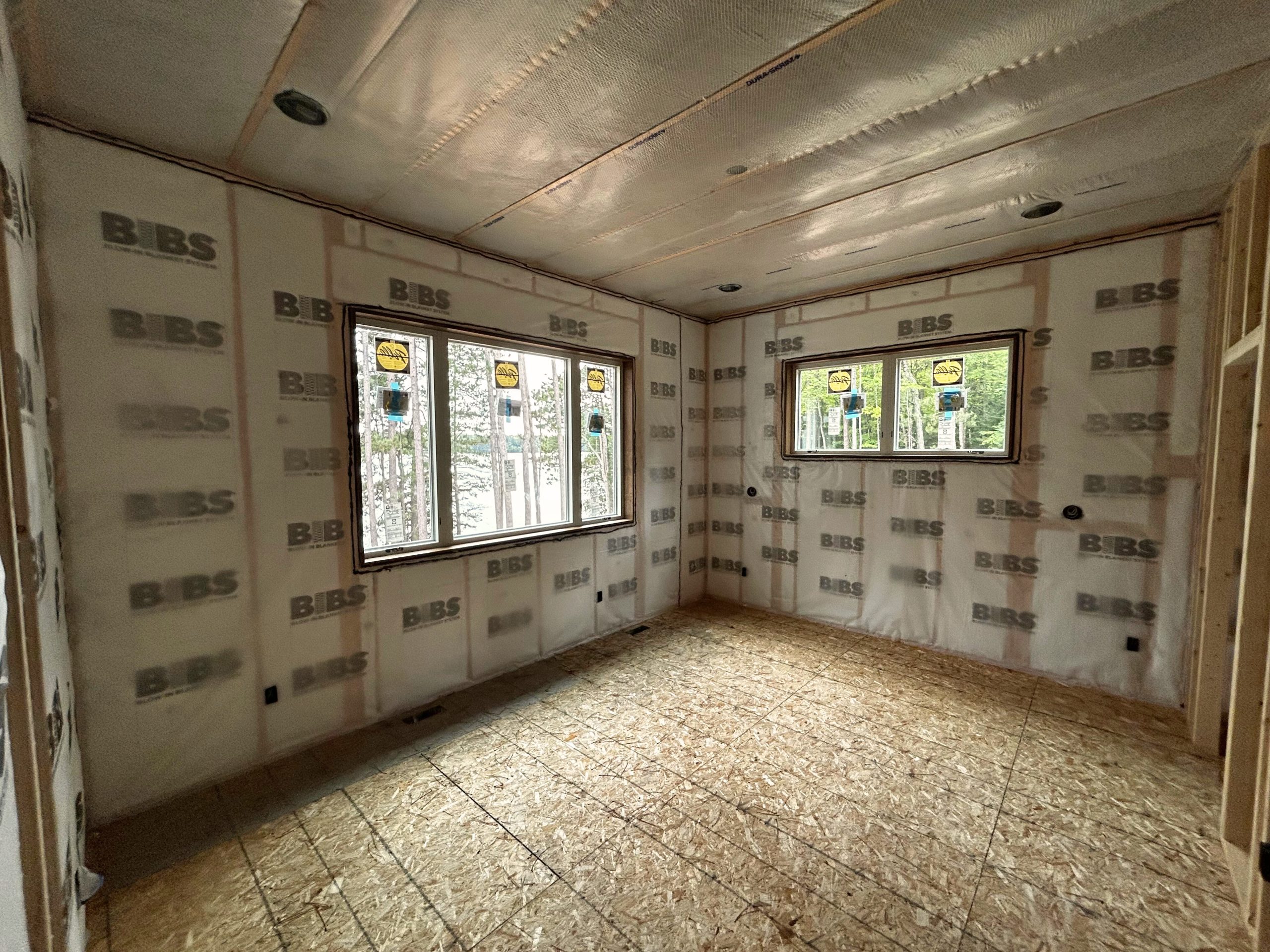
Blown-in fiberglass systems install insulation behind a mesh netting that allows insulation to be blown in densely to fill the entire wall cavity.
Pros
- Fills cavities around wiring and framing irregularities
- Consistent coverage with minimal gaps
- Good sound dampening qualities
- Non-combustible fiberglass material
Cons
- Requires trained installers
- Higher upfront cost compared with batt insulation
Health considerations
Like traditional fiberglass, blown-in fiberglass insulation can cause temporary irritation during installation. Once installed and enclosed behind drywall, it is generally considered stable and low risk for indoor air quality.
When builders use it
Blown-in fiberglass systems are often chosen when builders want more consistent cavity coverage than traditional batt insulation provides.

So What Is the Best Insulation for Northern Wisconsin Homes?
The reality is that no single insulation product is perfect for every home.
Many high-performing homes use a combination of insulation systems, selecting products that work best in different areas of the home.
For example, a home might use:
- spray foam in rim joists
- blown-in systems in walls
- high-performance attic insulation
The goal is to create a building envelope that manages heat loss, air movement, and moisture effectively in a cold climate.
How We Help Homeowners Make This Decision
At Lakefront Building & Design, our goal isn’t to push a particular insulation product. Instead, our focus is on helping homeowners understand how each system performs in Northern Wisconsin’s climate, the cost differences between options, and the health and durability considerations of each material.
We also rely on experienced trade partners, like our insulation professionals, who stay current on building science and installation best practices. Their expertise helps us evaluate how different systems perform in real homes and ensures the insulation is installed properly for long-term performance.
When homeowners understand the reasoning behind these choices, they can make confident decisions that support comfort, efficiency, and durability for years to come.