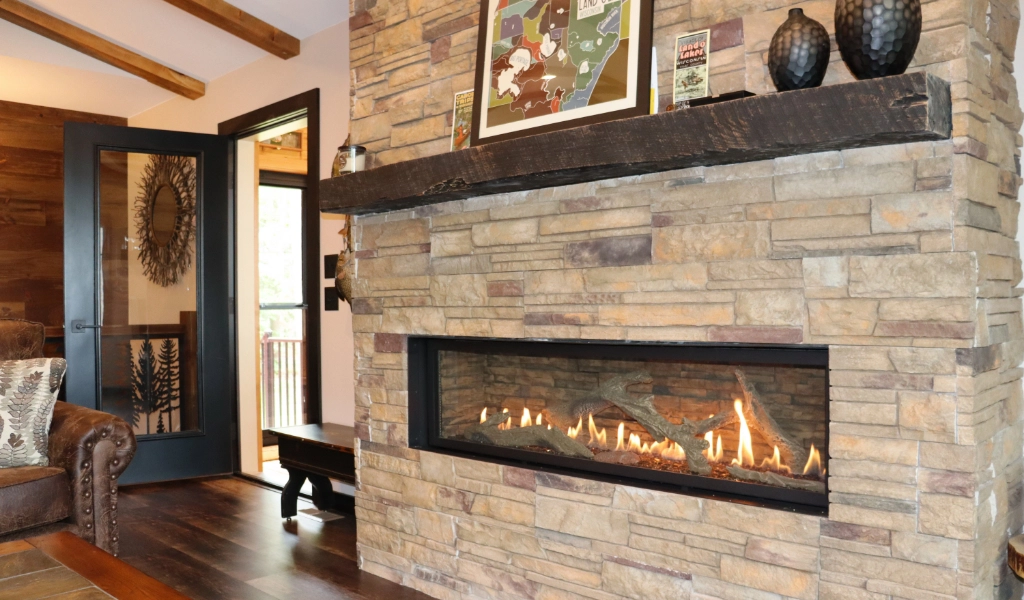
Stonework brings timeless beauty and durability to a home. Whether it’s a fireplace surround, an exterior accent wall, or a hearth, the right masonry details can completely transform a space. As part of the custom home building process, there are several design and installation considerations that help ensure the finished product fits both your style and the overall architecture of your home.
Drystack vs. Mortared Joints
One of the first design decisions involves how the stone will be installed:
- Drystack: Stones are set tightly together without visible mortar joints, creating a clean, modern look. This style puts more emphasis on the stone itself and works especially well with uniform shapes like ledgestone.
- Mortared Joints: Mortar is used between the stones, either recessed for a shadow line or brought flush for a smoother surface. This style has a more traditional feel and works nicely with irregular stone shapes where gaps are harder to avoid. Mortared joints can also add strength and weather protection, especially for exterior applications.
Cost Considerations
Drystack typically requires more precision cutting and labor time, since each stone must fit tightly without mortar to fill gaps. Mortared installations can be a bit more forgiving, which sometimes translates into lower labor costs. The material cost itself is often similar, but labor differences can make drystack more expensive overall. As part of our preconstruction process, we’ll review these details with you so you understand both the look and the budget impact.
Stone Shape & Cutting Style
The character of the stone makes a big difference in the overall feel of the project:
- Organic/Rounded Stones: These give a natural, rustic appearance. They often require more skill to fit together and may work best with visible mortar joints.
- Cut Stone: Rectangular or squared-off pieces create a cleaner, more contemporary style. Ledgestone falls into this category, where long, narrow strips stack tightly for a sleek finish.
As you work through the Preconstruction Process, we will have you look at samples of each in our local showroom so you can see how different cuts change the overall style.
Sealers & Outdoor Applications
For outdoor masonry, a sealer is often recommended to protect against moisture, staining, and freeze-thaw damage. Sealers can also enhance or darken the stone’s color, sometimes creating a “wet look.” Because every stone type reacts differently, we review options with you during design to ensure the finish matches your vision and provides the right level of protection for your project.
Wrapping Corners & Edges

Corners can make or break the realism of a stone installation. Some stone veneers offer corner pieces that wrap seamlessly around an edge, giving the appearance of full-thickness stone. Without these, you may end up with visible cut edges, which can look less natural. We carefully plan how corners, fireplace returns, and wall terminations will be finished so your stonework looks intentional from every angle.
Cap Stones on Exterior Masonry
For exterior stone features—like columns, knee walls, or garden borders—it’s common to finish the top with a limestone cap stone. These thick, flat slabs create a polished edge while protecting the stonework below from water infiltration. Caps can be cut with a simple square edge for a clean look or with a chiseled profile for added character. Choosing a lighter-toned limestone cap can also provide contrast against darker stonework, highlighting architectural details.
Hearthstone Choices

The hearth is often the focal point of a fireplace design, and your choice of material sets the tone:
- One-Piece Limestone Slab: Provides a smooth, continuous look with fewer seams. It feels clean and timeless, though the size and weight can make installation more challenging.
- Flagstone Pieces: Create a more rustic, textured look with natural variation between pieces. This style pairs well with organic stone surrounds and adds warmth and character.
We’ll help you weigh both the aesthetic and practical considerations so the hearth complements the rest of your stonework.
Final Thoughts
Masonry is a craft where small details make a big impact. From drystack versus mortar to stone shape, hearth style, and cap choices—each decision matters. As your builder, our role is to guide you through these options, coordinate with skilled trades, and make sure the details come together seamlessly. Our team integrates these choices into the broader building process so that your stone selections complement the architecture of your home and reflect your style.