When planning a new custom home, one of the biggest—and sometimes most confusing—decisions is how your home will be heated and cooled. Two common approaches we see are:
- A hydronic heating system paired with a furnace and central A/C, often including heated floors in garages and basements
- A traditional forced-air system with a gas furnace and standard ductwork
Both can be excellent options, but they work very differently. Below is a clear explanation of hydronic, forced-air, and combination systems to help you understand how each works—and why many homeowners choose a hybrid hydronic approach.
What Is a Hydronic Heating System?
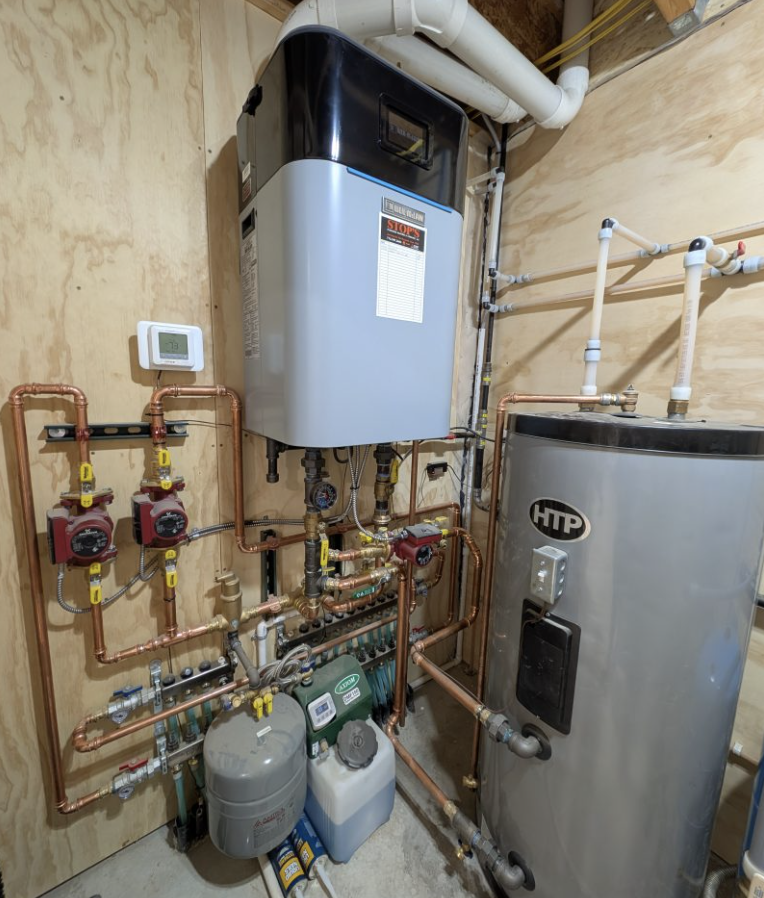
A hydronic heating system warms your home using heated water rather than blowing hot air. Water is heated—typically by a boiler—and circulated through tubing or pipes to deliver consistent, radiant heat.
Hydronic systems are commonly used in:
- Garage floors
- Basement floors
- Select areas on the main level
- Radiant baseboard systems
- Under-floor heat plates
Because radiant heat warms surfaces instead of air, it creates a steady, comfortable environment with fewer temperature swings.
Cooling with a Standalone Hydronic System
Because hydronic systems do not use ductwork, air conditioning in a standalone hydronic setup is typically achieved using ductless mini-split systems. These wall-mounted or ceiling-mounted units provide efficient, zoned cooling without the need for traditional ducts. However, this approach requires thoughtful placement of the ductless units.
Hydronic Heating in Key Spaces
Hydronic Garage Floor Heating
Hydronic tubing installed in the garage slab keeps the concrete warm throughout the winter months.
Benefits include:
- Snow and ice melting off vehicles
- A warmer, drier garage space
- Reduced moisture and corrosion
- A more comfortable workspace year-round
For homeowners in northern climates, heated garage floors are often a game changer.
Hydronic Basement Floor Heating
Basements are notorious for feeling cool—even when the rest of the home is comfortable. Radiant floor heat solves this problem.
Advantages include:
- Elimination of cool concrete floors
- More comfortable, usable living space
- Even heat without drafts
- Ideal for finished basements, home gyms, or playrooms
Because heat rises evenly from the floor, the entire space often feels warmer at a lower thermostat setting.

What Is a Forced-Air Heating System?
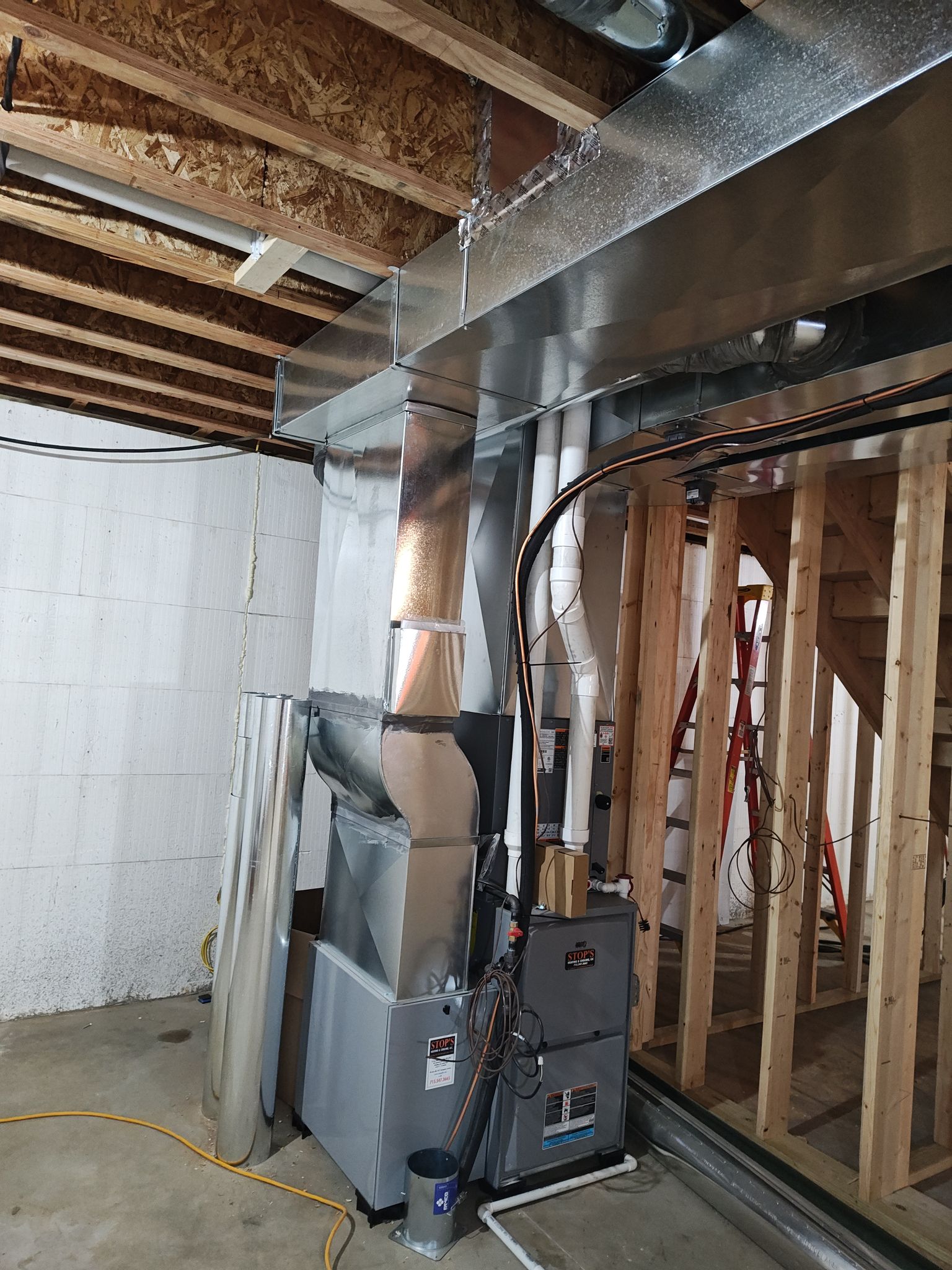
A forced-air system heats your home by warming air in a gas furnace and distributing it through ductwork and vents. In this type of system, the same ductwork is also used to deliver central air conditioning.
Forced-air system characteristics:
- Heated air is blown through supply vents
- Central A/C delivered through ductwork
- Faster temperature changes
- Potential for hot and cold spots
- Heat rises quickly and dissipates faster
Forced Air in Garages
Some homes use a gas unit heater in the garage rather than radiant heat.
Considerations:
- Heats the air, not the surfaces or objects
- Garage cools quickly once the heater turns off
- Less effective at managing moisture
- Typically louder than radiant systems
Hydronic + Furnace + Central A/C: How Combination Systems Work
Many custom homes use hydronic heating in combination with a forced-air furnace and central air conditioning. This hybrid system truly offers the best of both worlds when it comes to heating and cooling your home.
Hydronic Heating (Radiant Floors)
Hydronic tubing is installed beneath concrete or flooring and gently warms the surfaces above. Common areas include:
- Garage floors
- Basement floors
- Occasionally bathrooms or select living spaces
This creates a steady, even heat that rises naturally from the floor.
Furnace + Central Air Conditioning
A traditional furnace and duct system is used for:
- Cooling the home (central A/C)
- Supplemental heat in living spaces, if desired
- Air circulation, filtration, and humidity control
- Simpler configuration
This hybrid approach allows each system to do what it does best.
Side-by-Side Comparison: HVAC Options for Northern Wisconsin Climate

Which System Is Right for Your New Custom Home?
Choosing the right heating system comes down to your priorities, lifestyle, and how you plan to use each space in your home:
- Comfort-focused homeowners often prefer hydronic radiant heat
- Cold-climate homes benefit greatly from heated garages and basements
- Budget-conscious builds may lean toward forced air only
- High-performance custom homes often choose a hybrid system for maximum comfort, efficiency, and long-term satisfaction
There’s no one-size-fits-all solution—but understanding these differences early in the design phase helps ensure your home’s systems support how you actually live.
Final Thoughts
For new custom home builds, we often see homeowners choose between a hybrid hydronic heating and cooling system and a forced air heating and cooling system. Both systems can be great options depending on your priorities.
As part of our selections process, we work closely with you to evaluate heating options, understand how each system functions, and determine what makes the most sense for your home, budget, and lifestyle. Our goal is to help you choose a heating approach that supports a comfortable, efficient, and well-designed custom home from day one.